
On October 1, 2024, a Dallas-based startup company named, Colossal Biosciences, claimed to have re-created the first living specimens of an extinct species of canine carnivore that hasn’t stalked the earth for over 10,000 years.
Fossils recovered across North America reveal that the so-called, “dire wolf”, was about one-third larger and far more powerful than any of our present day varieties of gray wolves. Dire wolves relied on all that extra size and power to take down the huge megafauna herbivores that inhabited North America during what is termed, the Pleistocene epoch. By comparison, today’s gray wolves, (including all of the so-called sub-species, breeds, or varieties), would be ill equipped to prey upon extinct giant herbivores such as the Wooly Mammoth or the mighty Auroch.
In 2021, scientists were able to extract and sequence genetic material from a fossilized dire wolf tooth found in Sheridan Pit, Ohio and an inner ear bone dug up in American Falls, Idaho. Colossal’s scientists extracted DNA from these two fossils and were able to assemble what they claimed were two high-quality “dire wolf” genomes. They then used CRISPR gene editing technology and made “20 unique edits to 14 genes in the gray wolf genome”.
In the old days, the process called selective breeding was used to create sheep, cows, or dog breeds that exhibited specific desired attributes. To create a wolf with the characteristics that researchers assumed were exhibited by ancient wolves, Colossal researchers identified, selected, and then edited the specific genes that affect size, musculature, hair color, hair texture, hair length, and coat patterning.
The ability to extract DNA from fossils proved to be merely one step in the process. To create a real live animal with the morphological characteristics of dire wolves, Colossal’s team altered the genetic material from a particular type of gray wolf blood cell (called an epithelial progenitor cell) and “placed it into the egg cell of a domesticated dog that had had its genetic material removed.” Once the dog egg cells had successfully developed into embryos with the edited genes, they were implanted into eight different dog surrogates.
It took an average of 45 lab grown embryos per surrogate to successfully birth three healthy “dire” wolf pups. A fourth pup was birthed but died within ten days. The three living pups have now grown into adulthood and are being well cared for in an unspecified secure location.
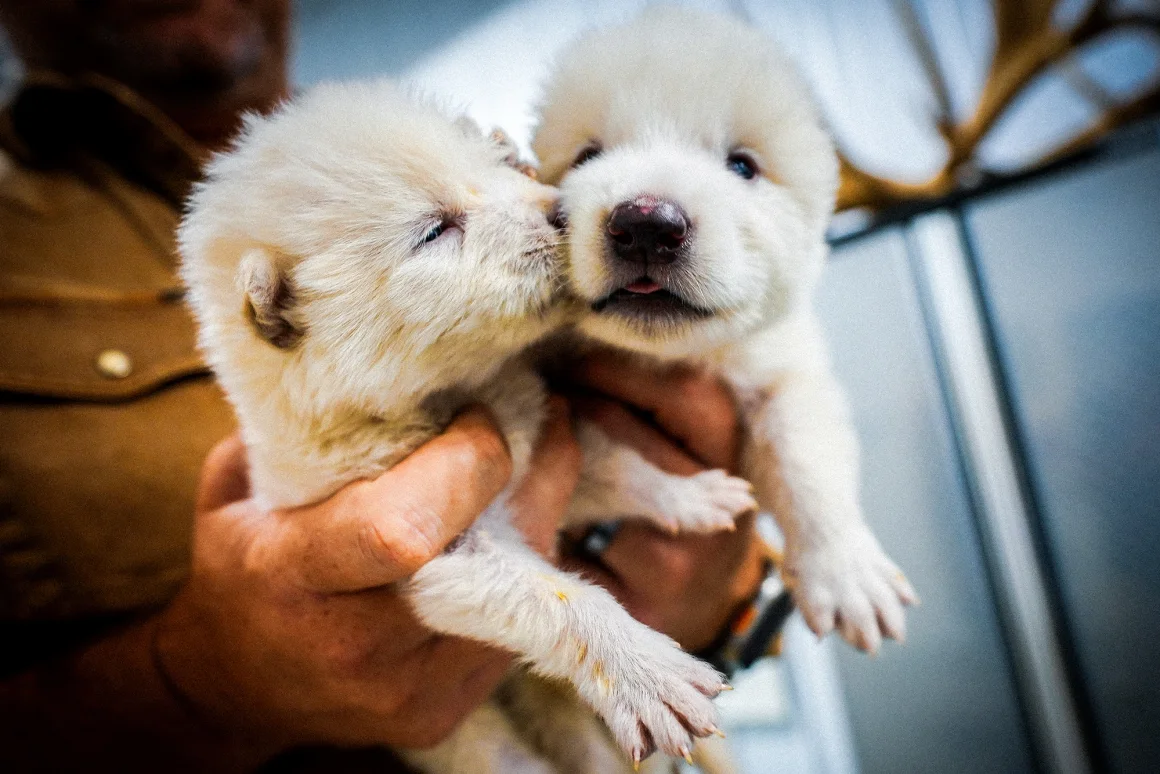
Although Colossal researchers claim that they successfully de-extincted the “dire” wolf, the scientific consensus is that they DID NOT resurrect an extinct species, but merely manipulated the existing gray wolf genome to engineer a breed of very large white wolves. Colossal DID NOT, in fact, create a brand new species of wolf or resurrect one that had gone extinct thousands of years ago. Colossal did, however, make a lot of money by taking liberties with the facts.
The excitement created by Colossal’s announcement of the successful “de-extinction of Aenocyon dirus, the dire wolf“, was met by praise from environmental groups and REWILDING advocates around the world. The market value of the company jumped from near zero before the announcement, to well over $300 million since. President Trump’s Secretary of the Interior, Doug Bergum, praised the accomplishment and called for using Colossal Biosciences’ gene-editing techniques to bring back other extinct animals.
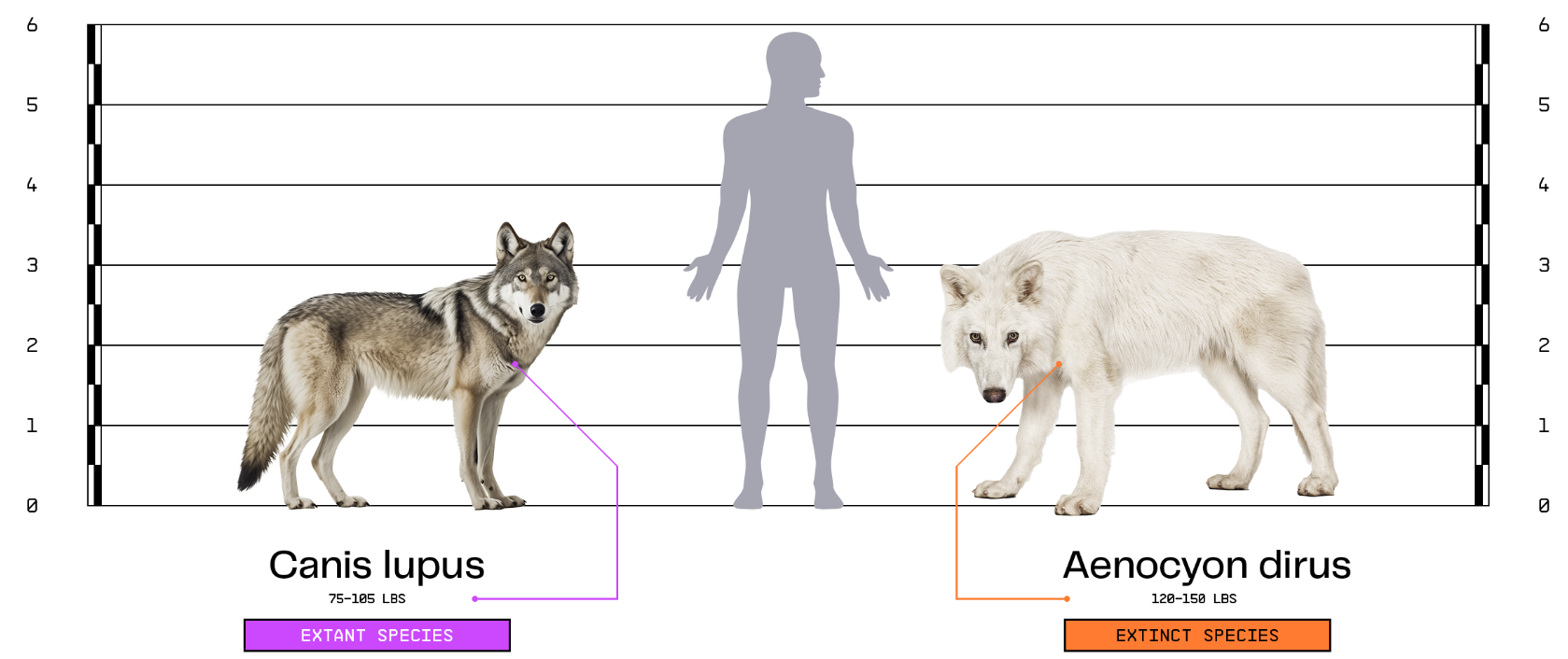
Morphological differences among today’s global population of gray wolves can be subtle or profound, just like the differences among various dog breeds. Regionally isolated populations inherit specific traits that are related to diet, environment, cross-breeding and inbreeding. Yet, one fact remains incontrovertible. All dogs, and all wolves, are the same species. That means Colossal’s new breed of wolves can interbreed and produce viable offspring with any other wolf or dog on the planet. The wide ranging global abundance of Canis lupus is a testament to the adaptability of the genome to meet the demands of a wide range of conditions and environmental factors.
While Colossal brags that their bio-engineer’s produced an animal that shares 99.5% of the genetics as the original “dire” wolf lineage, critics point out that these animals also share 99.5% of the same genetics as today’s gray wolves. While Colossal has managed to genetically modify the wolf genome and successfully breed some very large, white wolves, the fact is, the animals they produced are still merely a variety of Canis lupus. To make matters worse, no one knows what to do with these wolves now that they have been produced. Colossal’s wolves are totally unfit to occupy any current ecological niche or habitat on earth. If these laboratory creations were to be released into the wild, such misfits would likely be killed by other established wolf packs. If they did manage to survive, their genetic material would be absorbed into the prevailing wolf genome through cross breeding.
And let me just add another side note directed to all those stubborn people who bemoan the fact that Idaho (as well as other Rocky Mountain states) was home to a different, smaller, and more reclusive “sub-species” of wolf prior to the introduction of Canadian gray wolves in 1995. To those folks I say that Idaho’s pre-extant wolf variant has not, and will never really become extinct. The reason is that the Canis lupus genome is the most adaptable and hybridized genome of any large terrestrial predator on the planet. Any size or coloration variant can be created using tried and true selective breeding strategies or the same CRISPR bio-engineering techniques employed by Colossal to create their white giants.
After all is said and done, using gene editing tools doesn’t really yield results that are all that different from what could be achieved utilizing old fashioned selective breeding techniques that have been known to sheep herders and animal breeders for almost 4,000 years. In today’s world, a variety of methods could be employed to produce a smaller breed of wolf with a more timid disposition if one wanted to. In other words, if they can produce bigger meaner wolves, they can also produce smaller more timid wolves, if that is truly what the people want.
Just some food for thought.
Sources for this article include:
https://www.wired.com/story/scientists-brought-back-dire-wolf-deextinct/
https://news.stanford.edu/stories/2024/06/stanford-explainer-crispr-gene-editing-and-beyond
 omots page